table of contents
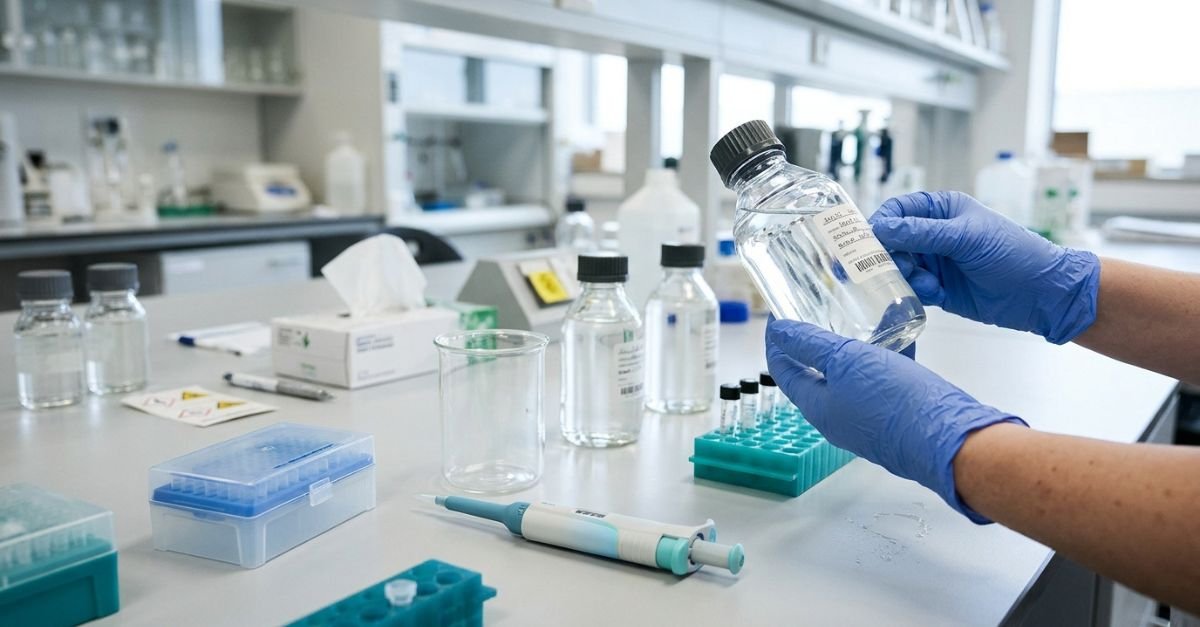
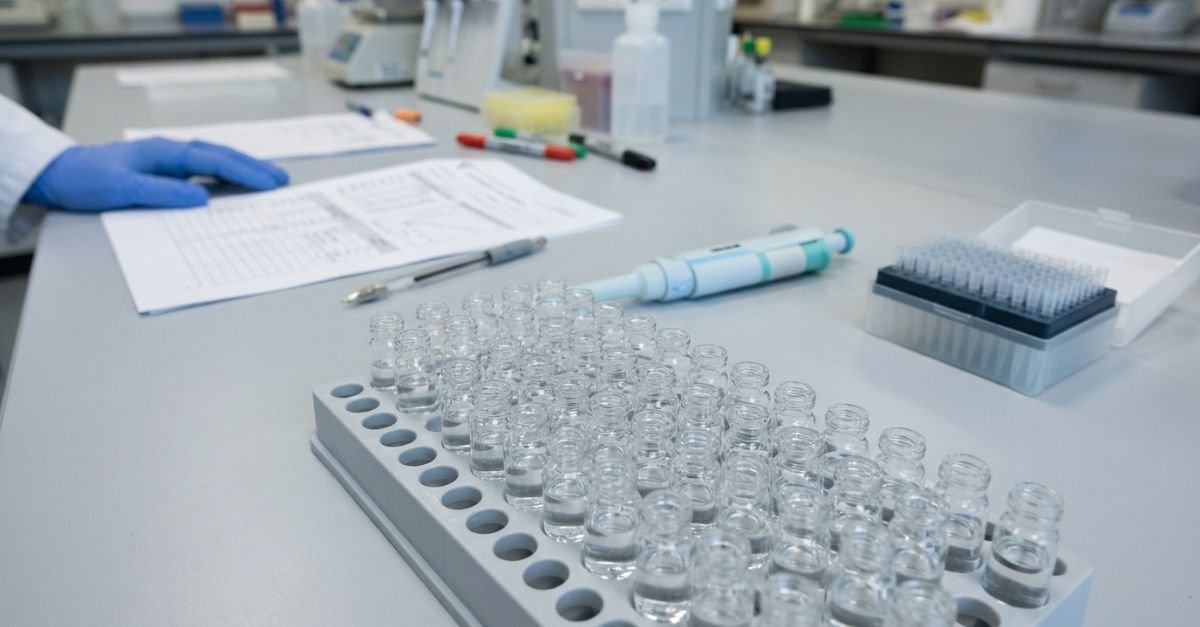
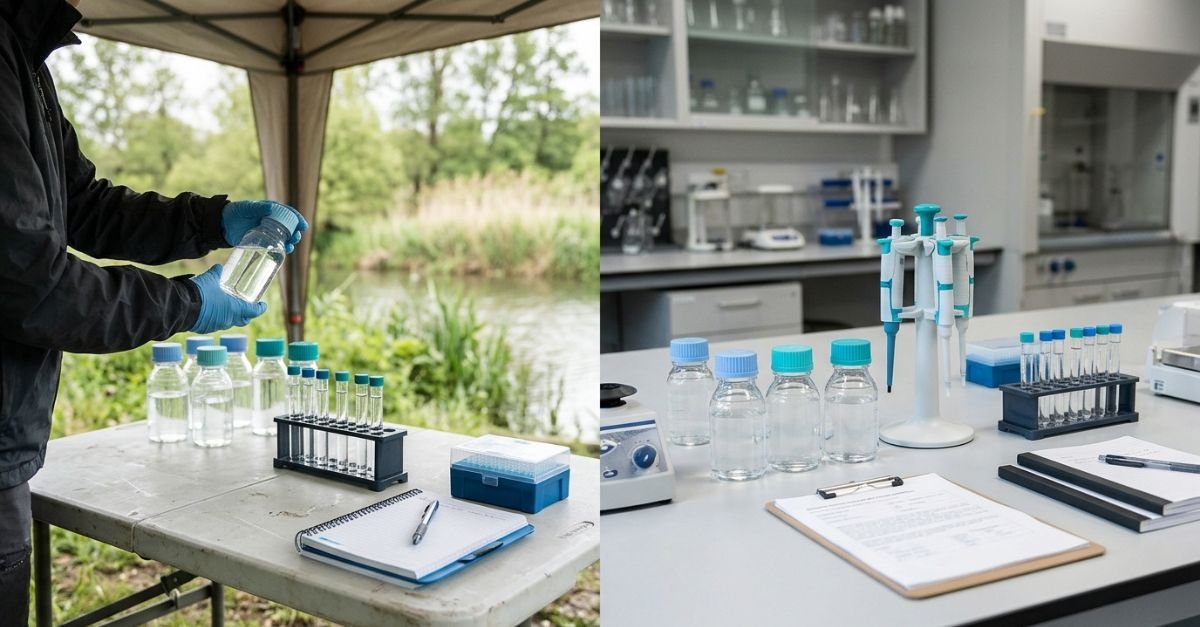
Field vs. laboratory toxicity testing involves more than choosing where to place an instrument. The selected workflow must support the method’s environmental conditions, sample preparation, controls, and reporting requirements.
For bioluminescent assays using Aliivibrio fischeri, both settings require attention to the biological response and how it is measured. A portable system may support testing near a sampling location, while a laboratory provides an established workspace for preparation and analysis. The appropriate choice depends on the testing question and the conditions that can be maintained.
For the underlying method, see Bioluminescent Toxicity Testing: Methods and Applications.
Define the required result first
Begin with the decision the test needs to support.
A project may require a screening result at a specified concentration, a concentration–response assessment, or testing under a particular documented procedure. These objectives determine the necessary preparations, controls, sample volumes, and calculations.
Avoid assigning an endpoint solely by location. A field result is not automatically limited to a qualitative indication, and a laboratory result is not automatically an EC50.
Aqua Science’s published BioLight Toxy information describes field and benchtop workflows with different protocol arrangements. The selected configuration and current instructions should establish which outputs are supported for the intended application.
For interpretation, see EC50 and Percent Inhibition in Toxicity Testing.
Temperature control is a method requirement
Ambient conditions can vary during field work. Establish how the test system will maintain and document the conditions required by its procedure.
Research by Correia Faria and Snook showed that temperature and sodium chloride concentration affected bacterial luminescence and toxicity kinetics in their experimental system. The study demonstrates why these variables deserve attention when evaluating a portable workflow. Its experimental settings should not be adopted as universal operating conditions.
Portability and temperature management are separate selection questions. Confirm which components are controlled, how samples and reagents are handled, and what happens if conditions move outside the permitted range.
A laboratory setup also requires verification. Record the performance of the equipment used to establish test conditions, rather than relying on the fact that testing occurs indoors.
Sample handling changes the workflow
Testing near a collection point may shorten the interval between sampling and analysis. That potential advantage depends on whether the field team can perform the required preparation and controls.
Transporting samples to a laboratory introduces a handling interval that must be planned and documented. Containers, preservation, transport conditions, holding times, and preparation must follow the selected procedure.
Environment Canada’s sediment reference method, for example, specifies its own collection, storage, mixing, and characterization requirements. These instructions illustrate the importance of planning the complete sample pathway for a particular matrix.
Before selecting either setting, establish whether the material will be tested as a whole sample, filtrate, extract, or another prepared fraction.
See Sample Preparation for Bioluminescent Toxicity Testing for these decisions.
Compare the complete operating setup
| Decision factor | Field workflow | Laboratory workflow |
|---|---|---|
| Working conditions | Establish a suitable location and manage environmental exposure. | Verify that the designated workspace supports the method. |
| Temperature management | Confirm how required conditions will be maintained at the site. | Verify the performance of temperature-control equipment. |
| Sample handling | Coordinate collection with preparation and testing. | Coordinate transport, receipt, storage, and preparation. |
| Reagents and consumables | Plan transport, storage, usable quantities, and waste collection. | Plan storage, preparation, inventory, and waste handling. |
| Power and equipment | Confirm the power source, accessories, and operating requirements. | Confirm installation requirements and supporting equipment. |
| Quality control | Include the controls and records required by the procedure. | Include the controls and records required by the procedure. |
| Data management | Establish sample identification, record storage, and review arrangements. | Connect instrument records with laboratory review and reporting. |
Use this comparison to define requirements. Individual systems and facilities may support different combinations of capabilities.
Evaluate total turnaround time
Instrument reading time is one component of the workflow.
A realistic turnaround assessment includes equipment setup, reagent preparation, equilibration where required, sample preparation, exposure, measurement, and review. Transport may add time to a laboratory workflow; field setup and environmental management may add time to an on-site workflow.
Ask for timing information associated with the actual protocol and configuration being considered.
A useful planning exercise is to map one complete batch, including its controls. Identify which activities can occur concurrently and which must follow a fixed sequence. Include the time needed to recognize and investigate an unacceptable control result.
This provides a more useful operating estimate than a reading-speed specification alone.
Quality requirements follow the procedure
Both settings need a defined basis for deciding whether a run is acceptable.
Specify the required controls, reagent records, equipment checks, and review responsibilities before deployment. Confirm that operators can perform these activities with the resources available.
The CRED framework developed by Moermond and colleagues identifies controls, validity criteria, exposure conditions, and statistical analysis as important considerations in evaluating ecotoxicity data. These considerations concern how a study was performed and documented.
The related article Quality Control in Bioluminescent Toxicity Testing explains the role of these checks.
Establish comparability before combining results
A testing program may use field and laboratory measurements for different purposes. Define that relationship before interpreting the results together.
For a comparison study, identify the sample collection and splitting procedure, preparation, concentration basis, exposure conditions, controls, and endpoints. Document differences between the workflows and establish how they will be evaluated.
For example, a hypothetical monitoring program might use on-site screening to prioritize samples for additional investigation. The laboratory work could address a separate analytical question or use a different protocol. Its results should be reported according to that purpose.
Agreement should be assessed through an appropriate study design. The CRED framework’s distinction between study reliability and relevance is useful here: a result may be technically sound while answering a different question from the one under comparison.
Location does not establish regulatory acceptance
For work associated with a permit or regulatory program, confirm the applicable method and reporting requirements.
The U.S. EPA lists specified Whole Effluent Toxicity methods used in the NPDES program. These involve defined organisms, procedures, and endpoints. Performing a bacterial screening assay in a laboratory does not automatically make it a replacement for a required WET test.
Identify the regulatory purpose separately from the operational benefits of either setting.
Evaluate the configuration against your application
Before choosing equipment, prepare an application brief containing:
- Sample types and expected matrix characteristics.
- Required method and endpoint.
- Testing location and environmental conditions.
- Expected workload, including controls.
- Reagent handling and storage arrangements.
- Power, accessories, documentation, and training needs.
- Data review and reporting responsibilities.
Aqua Science presents BioLight Toxy for field and benchtop use. Configuration selection should be based on current documentation and the requirements of the intended workflow.
Contact Aqua Science with your application brief to discuss the relevant configuration, reagents, and supporting documentation.
References
- Aqua Science. BioLight Toxy. Product and workflow information.
- Correia Faria, E.; Snook, R. D., 2004. The effect of temperature and NaCl concentration on the kinetic method of toxicity determination using Vibrio fischeri. Journal of Environmental Monitoring, 6, 953–956.
- Environment Canada. Sediment toxicity using luminescent bacteria: procedure for testing sediment.
- Moermond, C. T. A., et al., 2016. CRED: Criteria for reporting and evaluating ecotoxicity data. Environmental Toxicology and Chemistry, 35, 1297–1309.
- U.S. EPA. Whole Effluent Toxicity Methods.